
Kalender
Learning From the Past: Museum Heritage Trafficking in World War II and its Aftermaths
29. Juni 2026 - 30. Juni 2026, Riga, Latvia
ICOM Latvia invites researchers, museum professionals, representatives of archives and memory institutions, as well as experts in cultural heritage and security to submit papers for an international scientific conference to be held in Riga on 29–30 June 2026.
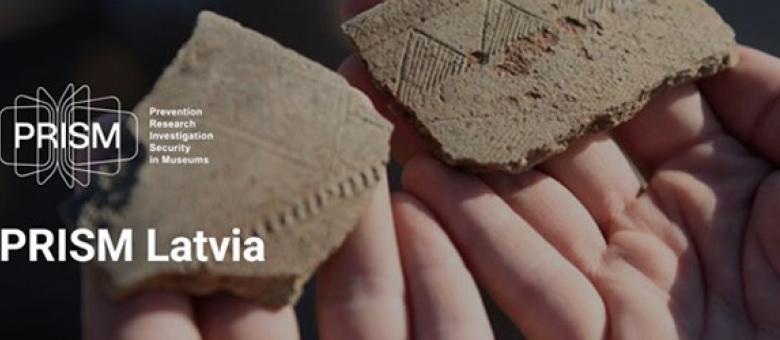
The conference is organized within the framework of the European Union–funded project PRISM (Prevention, Research, Investigation and Security in Museums), coordinated by ICOM. The Latvian national programme “Learning From the Past: Latvian Museum Heritage Trafficking in World War II and its Aftermaths (1940–1990)” examines the displacement, loss, and illicit circulation of cultural objects during wartime and occupation, analysing the long-term impact of these processes on museum collections and heritage management. The aim of the conference is to foster interdisciplinary discussion on the illicit circulation of cultural objects, the loss and displacement of museum collections in the context of 20th-century political upheavals, and to highlight the relevance of these issues in contemporary practices of security, documentation, and prevention.
Thematic Sections
1) The Impact of War, Occupation, and Regime Change on Museum Collections
The political upheavals of the 20th century significantly affected the formation, preservation, and interpretation of museum collections. Warfare, occupation regimes, and ideological control created conditions in which collections were displaced, fragmented, reorganized, or even deliberately destroyed. This section addresses how political power influenced museum practices, collection policies, and narratives, including mechanisms of censorship, the exclusion of “undesirable heritage,” and ideologically motivated transformations of collections, as well as their lasting impact on museum work today.
2) Legal Justice ? Historical Justice
The boundary between legal and illicit circulation of cultural property during World War II and the occupation period is often ambiguous and problematic. Forced displacement or sale, confiscation, the involvement of intermediaries, and politically driven changes in ownership complicate clear interpretations of property rights. This thematic line invites analysis of cases where legal frameworks do not correspond to historical realities, as well as discussion on the possibilities and limitations of restitution in situations where lack of evidence or incomplete documentation hinders the restoration of justice. Particular attention is also given to ethical issues and the role of museums in addressing such conflicts.
3) Provenance Research and Methodological Challenges Today
Provenance research has become one of the central tools in addressing illicit circulation and the displacement of cultural objects, yet it faces significant methodological challenges. Gaps in documentation, incomplete or ideologically influenced archival materials, and incompatibility between institutional datasets complicate research processes. This section invites reflection on methodologies, interdisciplinary approaches, and the potential of contemporary digital tools, as well as discussion on how to reconstruct object histories in conditions of fragmented and contradictory sources.
4) Object Biographies in National and Transnational Contexts
Museum objects often cross national borders, becoming part of broader international circulation processes. This sub-theme invites analysis of object “biographies” — their movement across time and space, changes in ownership, and transformations in meaning at different stages of their “lives.” Special attention is given to cases where objects cross national boundaries, raising questions about differing legal frameworks and understandings of cultural property across countries. It also addresses how such biographies can be reconstructed when their continuity has been disrupted.
5) Loss, Destruction, and “Invisible Heritage”
Many cultural objects were lost, destroyed, or removed from museum collections during World War II and the occupation period, often without leaving clear traces in documentation. This thematic line focuses on both identified and “invisible” losses — objects whose fate is unknown or only partially reconstructable. It invites analysis of mechanisms of loss, documentation challenges, and possibilities for reconstructing the historical scope of collections, as well as reflection on how these losses shape contemporary understandings of cultural heritage.
6) Digitalisation – Solution or Illusion?
Digital technologies and databases are increasingly used in documenting museum collections and conducting provenance research, offering new opportunities for data accessibility and analysis. However, digitalisation does not always resolve underlying issues related to fragmented or incomplete information. This section encourages critical evaluation of the potential and limitations of digital solutions, addressing questions of data quality, interoperability, and interpretation, as well as analysing whether and how digitalisation can contribute to a deeper understanding of the circulation of cultural objects.
Presentation format: 30 minutes
Honorarium: EUR 300
Travel and accommodation expenses will be covered for conference participants.
Following peer review, conference papers will be prepared for publication in a bilingual scholarly volume, bringing together both Latvian case studies and contributions from international researchers, thus creating an important resource for cultural heritage professionals in Latvia and across Europe.
Important Deadlines
Submission of abstracts (up to 300 words) and a short biography: by 15 April 2026
Notification of acceptance: by 30 April 2026
Submission of full papers: by 20 June 2026
Applications should be submitted via the application form: https://ej.uz/prismlvconference
Contact email: icomlatvija@gmail.com
The conference is part of the broader activities of the PRISM project, implemented in Latvia from December 2025 to the end of 2026, aiming to strengthen research capacity, documentation, and professional collaboration in investigating and preventing the illicit circulation of cultural objects.
Call for Papers:
https://latvia.icom.museum.lv/news/call-for-papers-for-an-international-...
More information:
https://latvia.icom.museum.lv/prism-latvija/


